Monday, July 23, 2018

July SLC Update


The SLC has been in full swing and we are nearing the end of our summer program. July 16th kicked off a two-day Agricultural Workshop that was sponsored by SDI. All SLC students and SDI summer interns were invited to the workshop.  On our first day we learned about the importance of statistics and research followed by introductions on soil, soil types, and ways of measuring soil. We then headed into the Agricultural Research Plot at SDI to take a look at the Bear Island Flint Corn. This is the second year of that project to revitalize the traditional corn that the Menominee had. Workshop participants also got a look at the Agricultural Research Lab inside SDI and learned about the different soil tests that can be done to help members of the community.

Day two had us traveling to Menīkānaehkem where we learned more about the organization and their plans for the community. Their mission is to help rebuild the community and focus on wellness through various activities such as teaching lodges and feasts. We also got to see the Bear Island Flint Corn from last year being made into hominy. The seeds from last year's corn was shared with Menīkānaehkem and planted, so we were able to see the growing corn when we visited. For lunch we all received a treat of hull corn soup that came from the Bear Island Flint Corn. After lunch we headed out to the Culture Museum to see Dr. Overstreet and learn more about the demonstration garden he started there. This garden is not cultivated with any modern day tools as they are trying to be as historically accurate as possible. After the museum, we actually got to go out to one of the sites Dr. Overstreet, SDI interns, and SLC students are working on. There we learned more about the raised garden beds and research behind it. It is fascinating to see this work being done right in our backyards! The mosquitoes were vicious and we all truly appreciate the whole team of people that are out there working to learn more about the traditional practices and food of the Menominee. Everyone that went into the woods safely made it out, some with more bites than others.

For the SLC students the week was just getting started. The next two days students were working with elementary teachers from Menominee Tribal School to develop lessons to implement at an upcoming STEM family night in the fall. The students have various lessons ranging from corn to stars and are very excited to put their lessons into action. They now have some understanding on how to incorporate STEAM ideas into their cultural ways of knowing. Overall, our week went very well and we are looking forward to the last exciting weeks of the summer.


Thursday, May 10, 2018

SLC Odyssey College Trip


On Thursday, May 3, members from the Sustainability Leadership Cohort (SLC) embarked on their 2018 Odyssey College Trip. After the three hour drive down, we arrived at the UW-Milwaukee School of Freshwater Sciences. While at the School of Freshwater Science, we were given a tour of the campus and shown what work is being done there. We were able to see young sturgeon and yellow perch that are being raised for research. The yellow perch have been at the school since 2009! Another part of the tour consisted of showing how fish farming and aquaponics go hand in hand. It was explained that the fish help the plants grow without soil and that they have a mutual relationship together.

In the afternoon we visited UW-Milwaukee’s main campus and toured various locations. Students were also shown the American Indian Student Services and the Electa Quinney Institute. Many of the students reflected on how they liked that there was a spot for native students to go if they needed help. After the tour, we were lucky enough to meet with the new president of CMN, Dr. Paul Trebian and various students and AIS faculty. The students enjoyed meeting him and I thought it was a great opportunity to get to know him and other students. By the end of the day, the students were so tired from all of the days activities and traveling. We headed off to our hotel in Madison and ended up eating at a Chinese Buffet. Students then had the option of swimming or playing in the hotel’s arcade.

On Friday, students were up bright and early to head off to the F.H. King Garden in Eagle Heights.The F.H. King Students for Sustainable Agriculture is a student led organization that is helping produce food for the individuals around campus. They also help educate about gardening and food sovereignty. Even though the rain kept us fairly soggy, there was much to see and learn. We were even visited by the local group of turkeys. After our rain adventure at the garden, we headed indoors to hear about the Intertribal Maple Syrup Producers Cooperative from Sheamus Johnson. Students were able to see how various native individuals are working together to produce and sell their maple syrup. Next up came lunch at the DeJope cafeteria. Students were amazed at all of the choices available to them. Rey Morales talked next about the importance of digital media, he proposed the question, “what makes a good video”? Students had a good conversation and expressed their opinions on the topic. The next speaker was from the Native American Center for Health Professionals (NACHP) and students were able to play a jeopardy style game. In that game, students learned some interesting and unique information. For example, did you know that humans share 70% of DNA with a slug?

We then focused our attention to the importance of food sovereignty and the mission of Slow Food Turtle Island from Becca Dower. After learning more about food, we took a walk to the Law School where we met Richard Monette. He talked about the importance of relations, motion, and balance and how that played a role in government. He encouraged students to make connections about what they are currently learning about and their cultures. After the Law School, we headed back to the vans by way of the campus public transport. That was quite the experience for those who had never ridden public transport before. I can say for sure that I will never need to ride that bus again!

Overall, I enjoyed the trip and heard many good reactions from the students. Some have better ideas of what they want to do after graduation now. It was a fun-filled, action-packed two days and a good way for the cohort to bond before the summer fun starts.


Friday, April 27, 2018

WIEA Conference


Posoh,

Last week I was lucky enough to attend the WIEA Pre-Conference and Youth Day. I was able to take away many different teachings from both days. Thursday was centered around historical trauma and trauma informed care. Friday, I attended the Youth Day track with the SLC students and various other students from the area. The Youth Day gave me the opportunity to get to know the SLC students better.

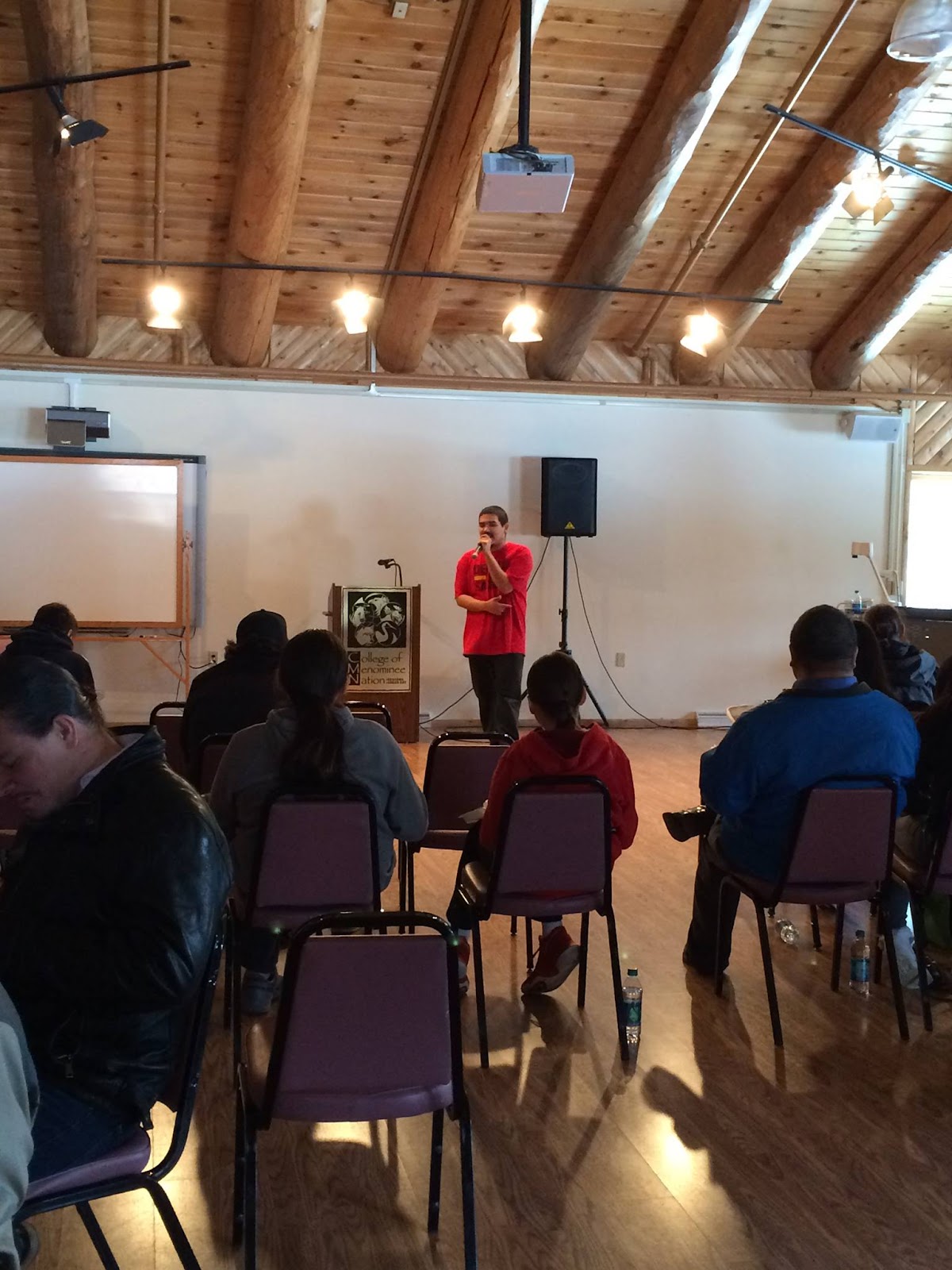
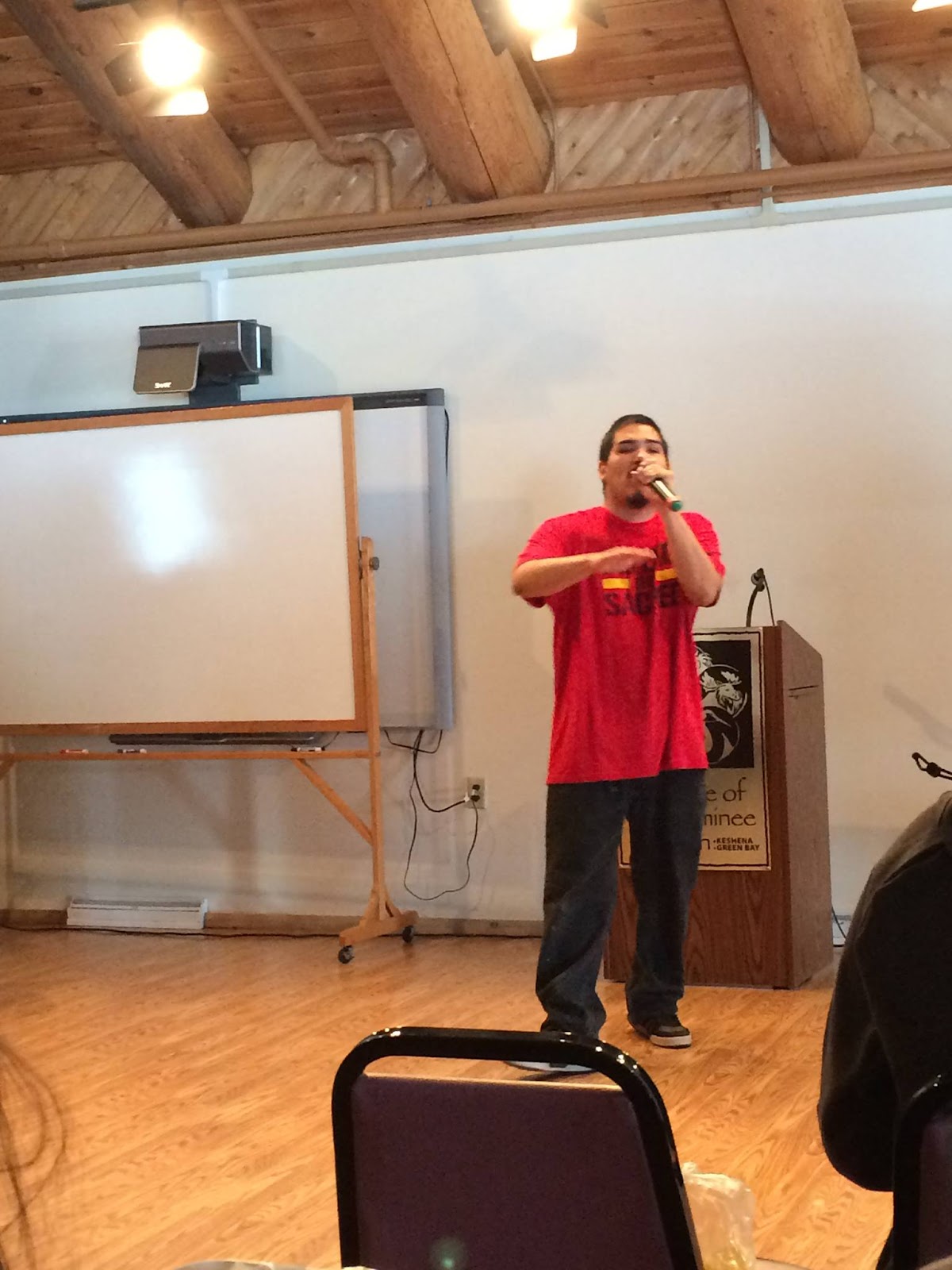
They started off the day with a Tobacco Tying Ceremony and followed with a lunch performance by Gary D. I am very grateful to experience the Tobacco Tying Ceremony and I learned such a great deal from the various individuals that presented to the students. The students were extremely engaged and I felt it was an excellent way to start the morning. The highlight of some of the student’s day was the performance by Gary D. For those of you who do not know, he is a recording artist from the Menominee Reservation. I found his music inspiring and I think he connected with many of the students. We even received his newest CD!

In the afternoon, the students were given a campus tour of CMN and heard more about future scholarship opportunities from AICF. There were a lot of quality conversations and questions going on in both sessions. To end the day, the students had the opportunity to meet Matika Wilbur. She spoke with students about her Project 562 and the importance of storytelling and indigenous knowledge. The students were all engaged and I personally learned so much from her visit. Overall, it was a wonderful two days and am very thankful that I had the opportunity to attend the conference. It has made it even clearer that I want to become an educator within our community and make a difference in the lives of our youth.


Monday, April 2, 2018

Traditional Ecological Knowledge

What is TEK and how can it be used with Western Science?

This was a question posed to me within my first week of interning at SDI. Traditional Ecological Knowledge (TEK) is the evolving knowledge of indigenous people that has been acquired for thousands of years. It is based on their direct contact with the environment. After reading many articles and resources about TEK, it is obvious that it can complement today’s Western Science.

The Sustainability Leadership Cohort is there to help students understand the two complementary methods and put them into action to better understand the environment around them. My goal is to mentor the students in gaining that better understanding, while also learning myself. Education is key to understanding the world around us and by using TEK, important cultural values and knowledge will not be lost to modern day techniques. I was amazed at the amount of resources available for teaching TEK in a modern day environment. Over the past few weeks, I have been introduced to the POSOH project and the curriculum that they put out. Why are more local schools not using these?

As an aspiring educator, I hope to be able to incorporate curriculum like this into my classroom. As I progress through my internship, I realize the importance for education geared towards the students who are in my classroom. In the case of this area, where we have multiple tribes and cultures, we need to incorporate more Traditional Ecological Knowledge. More students will have the opportunity to enjoy learning about science and can make more connections to their environment. After all, we are all tied to Mother Earth.

Friday, March 23, 2018

Posoh, my name is Marissa Vele and I am the Sustainability Leadership Cohort Education Mentor for the 2018 program year. I live in Wittenberg with my husband-Curtis, daughter-Leikyn, and my dog named Aries. I hold an Associate’s Degree in Business Management from NTC. Currently, I am working towards my Bachelor of Science Degree in Early Childhood/Middle Education and I am in my third semester at CMN. My plan is to teach within the area and give back to my community. In the meantime, I work as a special education paraprofessional at the Shawano Middle School. I enjoy working with a variety of different students and helping them succeed. I look forward to this internship because I can gain more experience working with students and gain more knowledge about SDI and what they do. I am grateful for this opportunity and look forward to the many experiences that I will have.

Thursday, November 9, 2017

FALCON 2017 – First American Land-Grant Consortium Conference and Poster Presentation, Washington D.C.

Dolly Potts, Agricultural Research Intern
Nov. 9, 2017

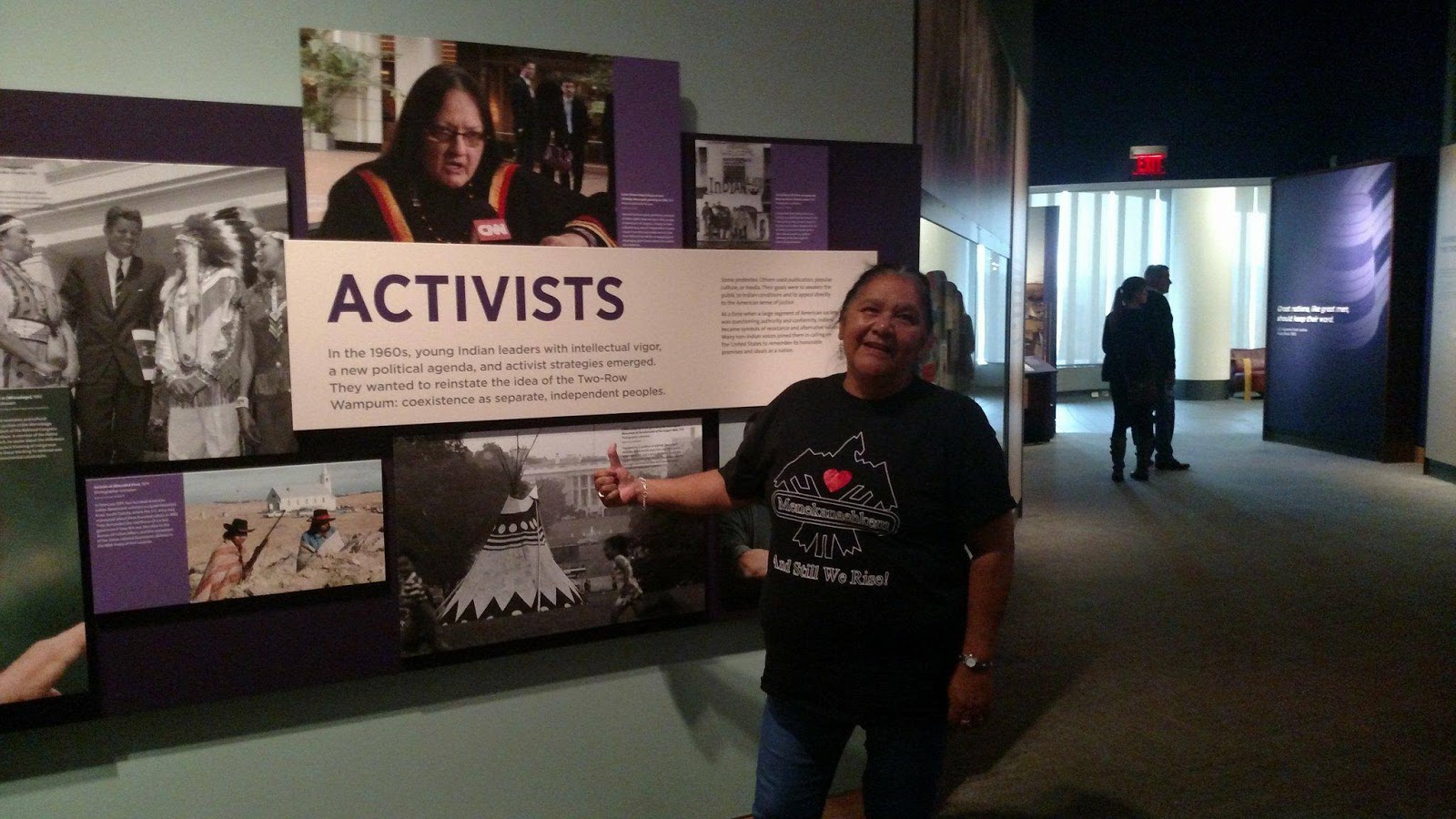
I traveled to Washington, D.C. on November 10 for my first First Americans Land-Grant Consortium (FALCON) conference to present my poster and presentation on traditional gardening and gathering. My trip proved to be a reminiscent and new experience for me. The last time I was in Washington D.C. was in 1978 with AIM (American Indian Movement) Longest Walk. The recent passing of long-time AIM activist, Dennis Banks made the trip very special. The walk was to make the country aware of the many broken treaties and the bad conditions on Indian reservations. Natives walked across the United States starting at Alcatraz in the San Francisco to Washington D.C. Everyone joined the walk from reservations along the route, I joined in Kansas. I visited some of the sites the group camped around while waiting for government officials to meet with us in 1978. The meeting never happened and the increased security in the nation's capital on this trip made me aware of how much things have changed.


The conference was great; we visited with a number of students who were involved in agricultural projects like ours. One of the groups was raising Bear Island Flint corn. Another had transitioned to raised beds and wanted to know more about the amendments we used in our garden. Everyone was very interested in how our project blended the traditional aspect with the scientific aspect. One of the participants talked about gathering as an important part of native culture. She gathered sixteen plants that were edible or had medicinal properties around the outside of the hotel. Remember, we were in downtown Washington, D.C.! She then proceeded to make a tea out of a few of the plants and it was delicious.


I left the conference proud of the College of Menominee Nation Sustainable Development Institute agricultural project growing Bear Island Flint Corn. I was very proud of the fact that the project has successfully blended indigenous science with western science. I am most proud of the fact that the project has brought back food that was grown and found in the ancient Menominee garden beds. The project has revitalized gathering practices and shared them with Menominee youth. This work has been a good step toward food sovereignty for the Menominee community.


Thursday, September 14, 2017

Update on Bear Island Flint Corn Research Plot

Dolly Potts, Agricultural Research Intern
Sept. 13, 2017


Fall is on the way and just around the corner is the harvest of the traditional agricultural research plot. Adam and I have been checking the plot at least three times a week. The stalks are drying and we get a peek at the kernels every now and then. Mostly when we find a cob the raccoons have taken down and chewed on. So our tally of raccoons has grown to eight. Thanks to Don Reiter, with the Environmental Services for live trapping the bandits and releasing them elsewhere. The damage was minimal with the raccoons getting twelve to fourteen ears.

Today we measured the moisture of the corn using a moisture reader a farmer would use. Adam picked a cob out of the plot to measure. The corn registered at 42% moisture content. We will pick the plot at 15% moisture content. The corn is shrinking and drying out on the stalks. A few of the ears are still green. They were planted later to fill in the spots that did not germinate. Adam, Rebecca and I have been discussing the harvest and working on the procedures for the testing. I braided a few of the cobs and hope to do some traditional harvesting braiding the corn.  In the meantime, Adam and I have been assembling the soil lab at SDI. I will write another blog about this project  soon.  


Tomorrow Adam, Rebecca and I leave for Minnesota to attend a Food Summit and Native American Nutrition conference. My poster on Traditional Gardening and Gathering Practices was accepted for a scholarship to the events. We are hoping to learn more about the traditional practices used to grow and harvest crops.  Our posters are on display in the atrium at CMN for viewing along with the rest of the summer interns’ projects. 

Adam holding corn
Rebecca Edler holding the moisture reader
Bear Island Flint corn braided